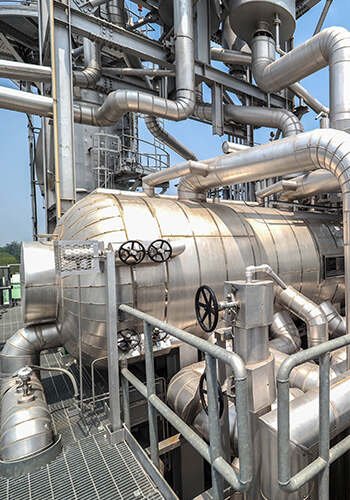
Circulating Fluidized Bed (CFB) boilers feature wide fuel adaptability, strong load regulation capability and favorable environmental performance, which are widely applied in thermal power plants and chemical captive power stations. Nevertheless, a prevalent operating problem is high unburned carbon content in fly ash. This issue directly reduces boiler thermal efficiency, increases net coal consumption and raises the load of dust removal systems, resulting in considerable economic losses. Field operating practices demonstrate that bed temperature serves as a core parameter affecting coal combustion and determining unburned carbon in fly ash. Too low bed temperature leads to incomplete combustion of coal particles; excessively high bed temperature easily triggers furnace slagging and excessive NOₓ emission. Only precise and stable bed temperature control combined with coordinated optimization of auxiliary parameters can fundamentally cut down unburned carbon in fly ash. Based on frontline operation & maintenance experience, this paper summarizes the optimized scheme for precise bed temperature control, coordinated adjustment strategies and troubleshooting techniques, providing references for efficient on-site operation.
1. Root Causes of High Unburned Carbon in Fly Ash (From Bed Temperature Perspective)
Excessive unburned carbon in fly ash of CFB boilers is mostly directly associated with unbalanced bed temperature control. According to field operating data, three major causes are identified:
1.Persistent low bed temperature: Long-term bed temperature below 880 ℃ drastically reduces coal combustion reaction rate. Fine coal particles stay for a short time in the furnace dilute phase zone and escape with flue gas before complete burnout, forming high-carbon fly ash. This problem is especially prominent under low load conditions.
2.Excessive bed temperature fluctuation: Frequent and improper large adjustments of coal feed rate, air flow and bed pressure cause sharp bed temperature swings and persistent local low-temperature zones. Coal combustion stability deteriorates and residual carbon cannot be fully burned out.
3.Uneven bed temperature distribution: Significant bed temperature deviation between left/right and front/rear furnace sections creates local low-temperature dead zones where coal particles remain incompletely burned. This is a key inducement for persistently high unburned carbon in fly ash under high load.
In addition, mismatching between bed temperature and air volume, bed pressure, coal particle size will further worsen burnout performance. Even if the average bed temperature meets the set value, unburned carbon in fly ash may still exceed the standard.
2. Practical Optimization Scheme for Precise Bed Temperature Control
Based on commissioning and O&M experience of multiple CFB boilers of different capacities, the optimal bed temperature range applicable to most bituminous coal and lean coal is determined as 880~920 ℃. This range balances full coal burnout, desulfurization efficiency, low-NOₓ emission and anti-slagging safety requirements. Compared with the traditional benchmark control of 850 ℃, unburned carbon in fly ash can be greatly reduced without risks of furnace slagging or overtemperature.
2.1 Zoned Setpoint Control of Baseline Bed Temperature
Abandon the single fixed bed temperature setting mode; dynamically adjust the baseline temperature according to boiler load to realize refined control:
1.Low load (50%~70% rated load): Maintain bed temperature stably at 880~900 ℃. Under low load, furnace heat storage is insufficient and bed temperature tends to drop and fluctuate. The lower temperature limit shall be appropriately raised to guarantee combustion activity of fine coal particles and avoid incomplete combustion at low temperature.
2.Medium & high load (70%~100% rated load): Maintain bed temperature stably at 900~920 ℃. With large fuel feed under high load, properly elevated bed temperature accelerates combustion reaction and strengthens burnout in the dilute phase zone. Meanwhile, bed temperature shall never exceed 950 ℃ for long to prevent bed material slagging, aggravated heating surface abrasion and NOₓ surge.
3.Limit control: Bed temperature shall not drop below 800 ℃ (risk of flameout and sharp rise of unburned carbon in fly ash) and shall not stay above 930 ℃ for long (greatly increased slagging risk).
2.2 Optimization Measures for Bed Temperature Stability
Frequent bed temperature fluctuation is a key inducement for excessive residual carbon in fly ash. Standardized on-site operations shall keep bed temperature fluctuation within ±10 ℃:
1.Stable temperature control via fine coal feeding adjustment: Avoid sharp increase or decrease of coal feed rate. Adopt the principle of small and repeated adjustments during load change; the single adjustment of coal feed shall not exceed 5% of total coal feed to prevent abrupt bed temperature rise or fall. For wet coal or coal with extra fine particle size, delay temperature response properly to avoid delayed incomplete combustion at low temperature.
2.Stable fluidization & temperature control by primary air: Primary air is the core parameter regulating bed temperature and bed pressure. Reduce primary air velocity under low load to cut heat loss; moderately increase primary air flow under high load to enhance bed material agitation and eliminate local low-temperature dead zones. Drastic fluctuation of primary air is prohibited to ensure uniform bed material fluidization and consistent bed temperature across the furnace.
3.Stable temperature management of loop seal: Strictly control loop seal temperature and recirculating ash flow to ensure stable return of circulating ash into furnace. Poor ash recirculation leads to insufficient furnace heat storage, decreased bed temperature, fewer combustion cycles of fine fuel particles and deteriorated burnout efficiency. Check the air chamber pressure of loop seal regularly and clear blockages to maintain stable operation of the circulating ash system.
2.3 Optimization of Bed Temperature Uniformity
Local low bed temperature inside furnace is a hidden burnout defect. Three adjustment measures are applied on site to eliminate low-temperature dead zones:
1.Balanced coal feeding on left and right sides: Verify output deviation between left and right coal feeders, calibrate coal feeder frequency and belt tension timely to guarantee uniform coal supply and avoid unilateral low-temperature zones.
2.Optimized secondary air proportioning: Maintain reasonable total secondary air flow. Fully open each damper of secondary air box to reduce damper resistance and improve secondary air jet momentum. Supplement oxygen for combustion in oxygen-deficient central furnace area, balance temperature field in upper/lower and front/rear furnace zones and improve burnout of unburned carbon particles in the dilute phase zone.
3.Regular bed material leveling: Check bed material thickness uniformity during shutdown maintenance or low-load stable combustion. Prevent local over-thick bed material from poor fluidization and low temperature, so as to realize full-range fluidization and synchronized stable temperature.
3. Coordinated Optimization of Auxiliary Parameters (Key Supporting Measures for Reducing Unburned Carbon in Fly Ash)
Bed temperature optimization must be coordinated with bed pressure, oxygen content, coal particle size and air distribution. Adjusting temperature alone cannot achieve optimal carbon reduction effect. Key supporting on-site optimization points are as follows:
3.1 Refined Bed Pressure Regulation
Appropriate increase of bed pressure raises bed material inventory and heat storage capacity in furnace, extends residence time of fine coal particles and significantly reduces unburned carbon in fly ash. Match bed pressure with load in practice: maintain 7~9 kPa under low load and 9~12 kPa under medium & high load. Meanwhile, control furnace differential pressure at 0.8~1.5 kPa to ensure sufficient circulating ash quantity, strengthen cyclic combustion of fuel and avoid rapid escape of fine particles. Excessively high bed pressure will increase fan power consumption and aggravate heating surface abrasion. Extreme adjustment shall be avoided.
3.2 Precise Matching of Furnace Oxygen Content
Even with qualified bed temperature, insufficient oxygen still causes incomplete combustion. In field operation, control furnace outlet oxygen content: 6%~8% under low load, 4%~6% under medium & high load. Prioritize fine adjustment via secondary air to supplement oxygen and guarantee adequate oxygen in the dilute phase zone for high-temperature combustion, enabling full oxidation of unburned carbon particles. Prevent incomplete combustion due to insufficient oxygen and excessive flue gas heat loss caused by overhigh oxygen.
3.3 Incoming Coal Particle Size Control
Over-fine coal particles escape with flue gas before full combustion; over-coarse coal particles burn slowly under fluidized state. Both conditions raise unburned carbon in fly ash and bottom slag. Adjust crusher hammer clearance and strengthen screening on site to control incoming coal particle size: fraction of 0~1 mm fine particles ≤30%, fraction of 1~6 mm particles ≥60%. Massive ultra-fine coal entering furnace shall be prohibited to cut the source of high-carbon escaping fly ash.
3.4 Discharge and Circulating Ash Management
Carry out standard bottom slag discharge in a small-quantity & frequent manner. Avoid sharp bed pressure drop and bed temperature fluctuation caused by large-scale slag removal. Meanwhile control furnace ash concentration, fine-tune ash discharge via recirculation system to prevent massive accumulation of fine ash covering bed material and interfering with heat transfer and combustion, and maintain stable furnace combustion conditions.
4. Troubleshooting for Common Abnormal Operating Conditions
4.1 Low bed temperature under low load and sharp rise of unburned carbon in fly ash
Phenomenon: Load ≤60% rated load, bed temperature below 870 ℃, persistently excessive unburned carbon in fly ash and dim furnace combustion. Treatment: Properly reduce primary air flow to reduce heat loss; slightly raise coal feed rate to stabilize temperature and lift bed temperature above 880 ℃; moderately close upper secondary air dampers and open lower secondary air dampers to strengthen combustion and heat storage in dense phase zone and stabilize bed temperature range.
4.2 Frequent bed temperature fluctuation and unstable unburned carbon in fly ash
Phenomenon: Bed temperature fluctuation exceeds ±20 ℃, volatile fly ash index and disordered combustion. Treatment: Limit adjustment range of coal feed and air flow, suspend large load adjustment; inspect coal feeder coal breakage and air leakage risks, check loop seal blockage and poor fluidization; fix bed pressure setpoint, prioritize stabilizing furnace heat storage, and fine-tune parameters only after bed temperature becomes steady.
4.3 Qualified average bed temperature but high unburned carbon in fly ash
Phenomenon: Average bed temperature around 900 ℃ without overtemperature or low-temperature alarm, while residual carbon in fly ash exceeds standard. Treatment: First verify coal fineness and clear blockages in screening and crusher; improve secondary air jet momentum, optimize upper/lower secondary air ratio to enhance oxygen supplement and burnout in dilute phase zone; slightly raise bed pressure to extend residence time of fine particles in furnace.
5. Optimization Effect and O&M Summary
After implementing the above bed temperature precise control and coordinated optimization measures, remarkable results have been achieved on multiple CFB boilers: unburned carbon in fly ash can be reduced from 12%~15% before optimization to below 6%, boiler thermal efficiency increases by 1.5%~3%, unit coal consumption decreases effectively. Meanwhile, no furnace slagging or overtemperature occurs, NOₓ emission remains stable, realizing both safe operation and economic benefits.
Core O&M experience: Reducing unburned carbon in fly ash for CFB boilers does not simply rely on raising temperature or adjusting air. The key lies in stabilizing bed temperature within target range, matching parameters coordinately and dynamically fine-tuning under varying working conditions. In daily operation, abandon extensive operation mode, strictly implement load-based zoned bed temperature setpoints, control coal particle size, bed pressure and oxygen content, timely handle local low temperature, poor fluidization and abnormal ash recirculation. Continuous optimization of combustion conditions through refined O&M can fundamentally resolve the common industry problem of high unburned carbon in fly ash.